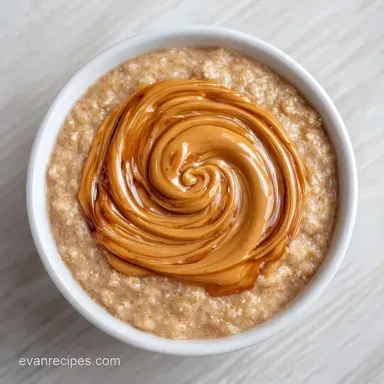
Creamy Nut Butter Oats: Velvety and Filling

- Time: 5 min active + 6 hrs chilling
- Flavor/Texture Hook: Velvety, nutty, and glossy
- Perfect for: Energizing morning meal prep
- Nut Butter Oats
- The Secret to Velvety Oats
- Component Analysis
- Gathering Your Essentials
- Tools You Will Need
- Step-by-Step Prep Guide
- Fixing Common Oat Issues
- Troubleshooting Common Issues
- Fun Twists and Swaps
- Making the Most of Your Batch
- Fact Checking the Oats
- Freshness and Storage
- Better Ways to Serve
- Recipe FAQs
- 📝 Recipe Card
Nut Butter Oats
Why is it that some breakfast oats taste like wet cardboard while others feel like a treat from a high end cafe? I used to struggle with this. My early attempts at "healthy" breakfasts were usually a bland, grey sludge that I forced myself to eat for the sake of the macros.
I tried every shortcut, but something was always missing.
Then I realized the secret wasn't in the ingredients, but in the texture. I remember the first time I actually got the ratio right. The smell of maple syrup and toasted peanuts hit me before I even opened the jar, and the consistency was like a thick pudding instead of a porridge. It changed how I viewed my mornings.
This recipe for Nut Butter Oats is all about that balance. You get a hit of protein that actually keeps you full until lunch, and a richness that makes it feel less like a diet meal and more like a reward. Whether you have a few minutes on the stove or you want to grab a jar and go, this is the way to do it.
The Secret to Velvety Oats
The Soak Secret: Cold soaking oats allows them to absorb liquid slowly, which keeps the grain intact while creating a creamy surrounding. This prevents that "gluey" texture common in overcooked porridge.
Fat Emulsification: Nut butter contains natural oils that blend with the almond milk to create a smooth, velvety mouthfeel. It acts as a thickener that doesn't rely on starch alone.
Chia Gelation: Chia seeds create a mucilaginous coating when wet, which traps moisture and adds a satisfying "pop" to every bite. You can read more about how different grains behave during hydration on Serious Eats, which helps in understanding why old-fashioned oats work best here.
Protein Binding: Adding the powder at the right time prevents clumping. When folded into the thickened base, the powder integrates without leaving those chalky streaks.
| Method | Time | Texture | Best For |
|---|---|---|---|
| Overnight | 6 hrs | Pudding like | Busy mornings |
| Stovetop | 10 mins | Warm & Silky | Slow weekends |
Component Analysis
| Ingredient | Science Role | Pro Secret |
|---|---|---|
| Rolled Oats | Structural Base | Use certified gluten-free if sensitive |
| Peanut Butter | Fat/Flavor | Stir the jar well to get the oil |
| Chia Seeds | Thickener | Don't skip these for the "set" |
| Protein Powder | Density/Nutrition | Vanilla adds a subtle sweetness |
Gathering Your Essentials
For this recipe, you want ingredients that complement each other without fighting for dominance. I've found that using natural peanut butter, the kind where the only ingredients are peanuts and salt, makes a huge difference in the final taste.
- 1/2 cup (45g) old-fashioned rolled oats Why this? Better chew than quick oats
- 3/4 cup (180ml) unsweetened almond milk Why this? Neutral base that lets nut butter shine
- 1 pinch (0.5g) fine sea salt Why this? Cuts through the richness
- 2 tbsp (32g) natural creamy peanut butter Why this? Provides the velvety core
- 1 tbsp (15ml) pure maple syrup Why this? Natural, deep sweetness
- 1/2 tsp (2.5ml) pure vanilla extract Why this? Rounds out the peanut flavor
- 1 tbsp (12g) chia seeds Why this? Essential for the thickness
- 1 scoop (30g) vanilla protein powder Why this? Boosts satiety and creaminess
If you're out of almond milk, oat milk is a great swap as it's naturally creamier. For the sweetener, honey works, but it has a stronger floral note that might distract from the peanut butter. If you love this combination of flavors, you might also enjoy my Peanut Butter Fudge for a treat later in the day.
Tools You Will Need
You don't need a fancy kitchen for this, but a few specific items make the process smoother. For the overnight version, a wide mouth mason jar is the gold standard because it's easy to stir and portable.
If you're going the stovetop route, use a small saucepan with a heavy bottom. This prevents the milk from scorching at the edges. A silicone spatula is also a lifesaver here, as it lets you scrape every last bit of Nut Butter Oats from the sides of the pan.
Step-by-step Prep Guide
Phase 1: The Assembly 1. Combine rolled oats, almond milk, chia seeds, and salt in a mason jar and stir vigorously. Note: This ensures no chia clumps form at the bottom. 2. For the stovetop method, combine these same ingredients in a saucepan over medium heat. 3.
Bring the pan to a gentle simmer, stirring occasionally until the oats look plump and the liquid has reduced by half.
Phase 2: The Texture Set 4. Fold in the peanut butter, maple syrup, and vanilla extract. Note: Doing this after the initial soak/simmer keeps the flavors bright. 5. For the overnight version, seal the lid and refrigerate for at least 6 hours. 6.
For the stovetop version, reduce heat to low and stir the nut butter in slowly until the mixture looks glossy and uniform.
Phase 3: The Final Fold 7. Gently stir in the vanilla protein powder. Note: If using stovetop, remove from heat first so the powder doesn't "cook" and get grainy. 8. Stir the mixture one final time until you smell the warm vanilla and the texture is velvety. 9.
Let it sit for 2 minutes to allow the protein powder to fully hydrate.
Chef's Note: To get a truly professional finish, whisk your protein powder with a tablespoon of the milk first to make a paste before stirring it into the oats. This guarantees zero lumps.
Fixing Common Oat Issues

It's easy to get the ratios off, especially if your protein powder is a different brand. Some powders absorb way more liquid than others.
Troubleshooting Common Issues
| Issue | Solution |
|---|---|
| Why Your Oats Are Too Runny | This usually happens if the chia seeds didn't have enough time to swell or if you used a thin nut butter. If you wake up and your Nut Butter Oats look like soup, don't panic. |
| Why the Protein Powder Clumps | Adding powder to boiling oats often causes it to seize, creating little rubbery balls. Always add your protein after the heat is off or during the cold soaking process. |
| Why the Taste is Bland | Even with maple syrup, oats can taste flat without enough salt. A tiny pinch of sea salt acts as a magnifying glass for the peanut butter and vanilla. |
Common Mistakes Checklist
- ✓ Avoid using "instant" oats; they turn to mush.
- ✓ Stir the chia seeds immediately after adding liquid.
- ✓ Use a room temperature protein powder for easier mixing.
- ✓ Don't forget the pinch of salt.
Fun Twists and Swaps
One of the best things about this recipe is how adaptable it is. You can easily pivot based on what's in your pantry. If you want something different, maybe a Peanut Butter Cake for a weekend brunch, the flavor profile is similar but much more decadent.
The Nut Butter Swap You aren't stuck with peanut butter. Almond butter creates a more subtle, nutty flavor, while cashew butter makes the texture even more velvety. If you're using almond butter, I suggest adding a dash of cinnamon to bring out the warmth.
The Protein Pivot If you're avoiding whey, a pea or soy protein works well. Just be aware that plant based proteins are often thirstier, so you might need to add an extra 2 tablespoons of almond milk.
The Sweetener Shift Maple syrup is my go to, but date syrup provides a caramel like depth. For those skipping added sugar, a mashed ripe banana stirred in during Phase 1 adds natural sweetness and a bit more creaminess.
| Original Ingredient | Substitute | Why It Works |
|---|---|---|
| Peanut Butter | Almond Butter | Similar fat content. Note: Milder flavor |
| Almond Milk | Soy Milk | Higher protein. Note: Slightly thicker |
| Maple Syrup | Mashed Banana | Natural sugars. Note: Changes texture to be softer |
Decision Shortcut
- If you want it extra creamy: Use full fat coconut milk.
- If you want more crunch: Fold in toasted flax seeds at the end.
- If you want it lower calorie: Swap maple syrup for a few drops of stevia.
Making the Most of Your Batch
Scaling this recipe is straightforward, but you can't just multiply everything by four and expect it to behave the same way in one big pot.
Scaling Down If you're making a half portion, use a smaller jar. Reduce the cooking time for the stovetop version by about 20%, as smaller volumes of liquid evaporate faster.
Scaling Up When doubling or tripling the batch for the week, work in batches. If you use a massive pot, the oats at the bottom can overcook while the top stays raw. I recommend preparing 4-5 individual mason jars on Sunday night.
For the liquids, you can reduce the total almond milk by about 10% when making a large batch, as less moisture escapes.
The "Baking" Variation If you have leftover Nut Butter Oats, you can actually bake them. Spread the mixture into a greased baking dish and bake at 180°C for 20 minutes until the top is golden and slightly firm.
It turns into a high protein breakfast cake.
Fact Checking the Oats
There are a few things people always tell me about oats that just aren't true. Let's clear those up.
The "Boiling" Requirement Many people think you have to boil oats to make them digestible. This isn't true. The cold soaking process in overnight Nut Butter Oats breaks down the starches enough for most people to digest them easily, and it actually preserves more of the nutrients.
The "Chia is Optional" Myth Some say chia seeds are just for "health" and don't affect the recipe. In reality, they are the structural glue of this dish. Without them, the almond milk often separates from the oats, leaving you with a watery mess at the bottom of the jar.
The "Protein Ruins Texture" Idea Some claim protein powder makes oats chalky. This only happens if you use poor quality powder or add it to high heat. When integrated correctly, it actually adds a luxurious, creamy thickness.
Freshness and Storage
To keep your Nut Butter Oats tasting fresh, store them in airtight glass containers. Glass is better than plastic because it doesn't absorb the smells of the nut butter over time.
Fridge Life These will stay great in the fridge for up to 4 days. By day 3, they actually become even creamier as the oats fully saturate. If they thicken too much by day 4, just stir in a splash of milk before eating.
Freezer Tips You can freeze these, but I recommend doing it without the fresh toppings. Freeze in small portions for up to 1 month. To reheat, thaw in the fridge overnight and then microwave for 60 seconds until steaming and fragrant.
Zero Waste Habits Don't throw away the residue in your peanut butter jar. Pour your almond milk and maple syrup directly into the nearly empty jar, shake it up, and then add your oats. This ensures you get every last bit of nut butter and means one less dish to wash.
Better Ways to Serve
The base is great, but the toppings are where you can really play around with the energizing side of breakfast.
The Contrast Method Since the oats are velvety and rich, you need something to cut through that. Fresh blueberries or raspberries add a tart acidity that balances the peanut butter. I love adding a few pomegranate seeds for a little burst of juice.
The Crunch Factor To avoid a "one note" texture, add something crispy on top right before serving. Sliced almonds, pumpkin seeds, or even a sprinkle of cacao nibs provide a great contrast to the soft oats.
The Protein Power Pair For a truly fueling start, top your bowl with a dollop of Greek yogurt and a drizzle of extra almond butter. This adds another layer of creaminess and keeps you full well into the afternoon.
If you're feeling fancy, a sprinkle of flaky sea salt on top makes the chocolatey notes of the peanut butter pop.
Recipe FAQs
What is the secret to creamy oatmeal?
Stir in peanut butter and maple syrup after the initial soak or simmer. This preserves the emulsion and creates a glossy finish. If you enjoyed mastering texture control here, the same principle of fat integration applies to our chewy homemade cookies.
How to make these oats high protein "proats"?
Stir in one scoop of vanilla protein powder. Add the powder during the cold soaking process or after removing the pan from heat to prevent it from seizing into rubbery clumps.
Is peanut butter good for overnight oats?
Yes, it provides essential fats and a velvety texture. Folding it in after the oats have soaked ensures the nut butter is distributed evenly without becoming too oily.
Is it true that overnight oats are bad for diabetics?
No, this is a common misconception. The high fiber content from the rolled oats and chia seeds helps stabilize blood sugar levels by slowing the absorption of the maple syrup.
How to prevent the peanut butter from clumping?
Stir the mixture one final time before serving to fully incorporate the nut butter. Using a natural creamy peanut butter that has been pre-stirred also prevents separation.
Is this a good breakfast option for people avoiding eggs?
Yes, it is naturally egg-free. The thickening properties of the chia seeds and the starch from the rolled oats provide plenty of structure without needing binders.
Are overnight oats ok for gastritis?
Generally yes, as they are gentle on the digestive system. The prolonged soaking process breaks down the grains, making them much easier to digest than cooked or raw oats.
Nut Butter Oats: Creamy Meal Prep